MOSS-TTS-Nano: A Featherlight Voice That Actually Breathes
There's something quietly radical about a voice model that fits in your pocket but sounds like it has a soul. MOSS-TTS-Nano is exactly that kind of surprise — the kind that makes you stop mid-sentence and think, wait, did that just breathe?
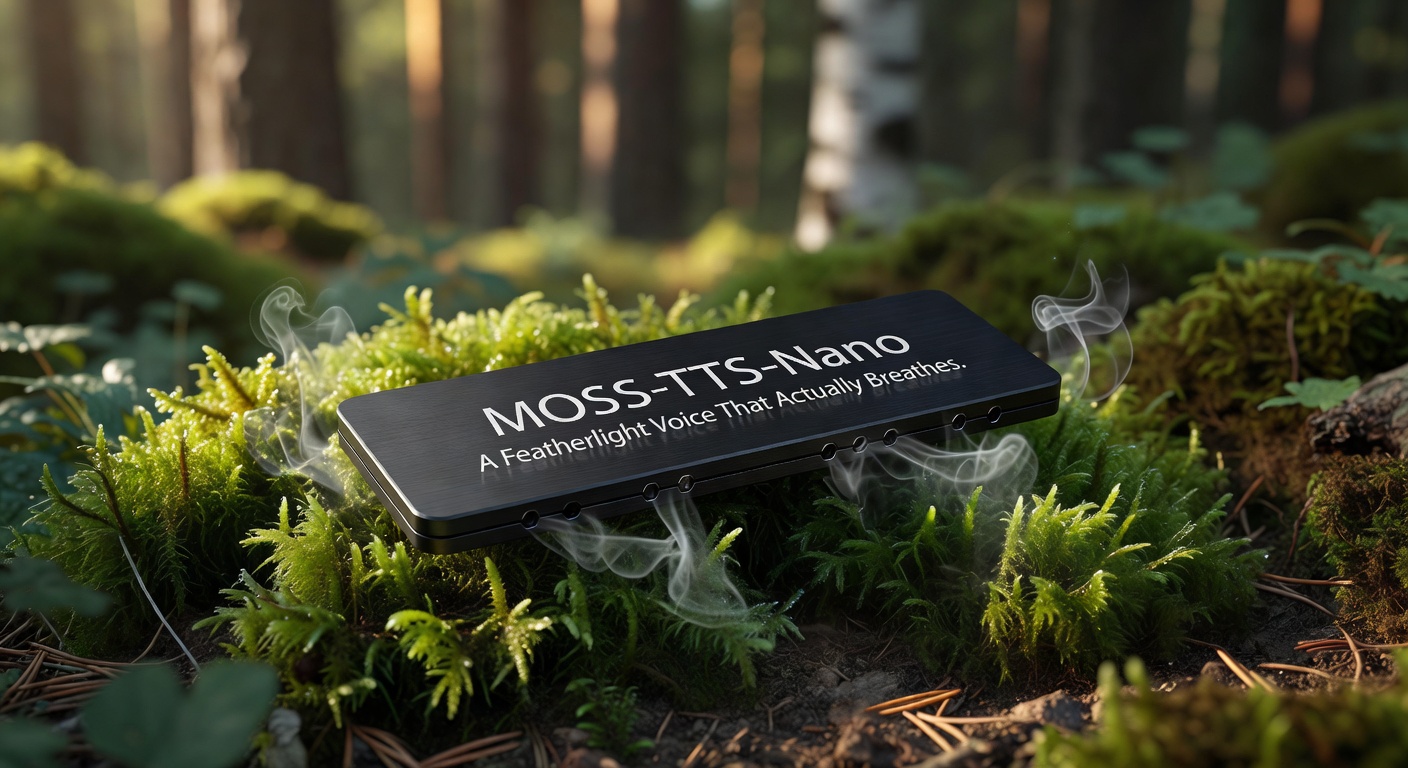
Small Body, Surprisingly Big Presence
Most lightweight TTS models make a trade. You get speed, you lose warmth. You get portability, you lose the little imperfections that make a voice feel real — the slight rise before a question, the natural pause after a comma, the way a human voice doesn't just say words but seems to consider them first.
MOSS-TTS-Nano refuses that trade. Built for efficiency without sacrificing expressiveness, it sits in a strange and beautiful middle ground: featherlight enough to run on edge devices, yet rich enough to carry emotion without sounding like it's performing emotion. There's a difference. Most models perform. This one just... speaks.
What Makes It Feel Alive
The "nano" in the name might suggest minimalism, but don't let the label fool you. Under the hood, MOSS-TTS-Nano draws on prosody modeling that goes beyond simple pitch and speed adjustments. It handles:
Put together, these elements create something that's hard to name but easy to feel. You stop noticing the voice and start hearing the content. That's the goal, and it's harder to achieve than it sounds.
Efficiency Without the Apology
Lightweight models often come with an implicit apology baked in — yes, it's not perfect, but it's fast. MOSS-TTS-Nano skips the apology. Its architecture is lean by design, not by compromise. Inference is fast enough for real-time applications, deployment footprint is small enough for constrained environments, and yet the output doesn't ask you to lower your expectations.
This matters enormously for developers building voice interfaces, accessibility tools, language learning apps, or anything where a cold, robotic voice would break the experience before it even begins.
A Voice for the Edges — Literally
Edge deployment is where MOSS-TTS-Nano truly earns its name. No cloud dependency, no latency waiting for a server to think. The voice lives on the device, responds instantly, and doesn't need a data connection to sound like a person. In a world increasingly anxious about privacy and connectivity, that's not a minor feature — it's a philosophy.
The best voice interface is the one you forget is there. MOSS-TTS-Nano is quietly working toward that invisibility.
Where It Fits in Your Stack
Whether you're building a conversational agent, a reading assistant, or an ambient interface that narrates your world, MOSS-TTS-Nano slots in without demanding ceremony. It plays well with existing pipelines, handles multilingual content with grace, and scales down to hardware that would make heavier models weep.
And if you're working with tools like Claude Code — particularly through platforms like clawdfree that offer subscription-free access with fast relay API support — integrating a model like MOSS-TTS-Nano into your voice-enabled AI workflow becomes surprisingly frictionless. Build the logic with Claude, give it a voice with Nano. The stack practically assembles itself.
Final Thought
MOSS-TTS-Nano is a reminder that "small" and "alive" aren't opposites. Sometimes the lightest things carry the most presence — like a whisper in a quiet room that somehow fills it completely. If you haven't listened yet, it's worth a moment of your time. You might find yourself leaning in.
Comments
Leave a Comment